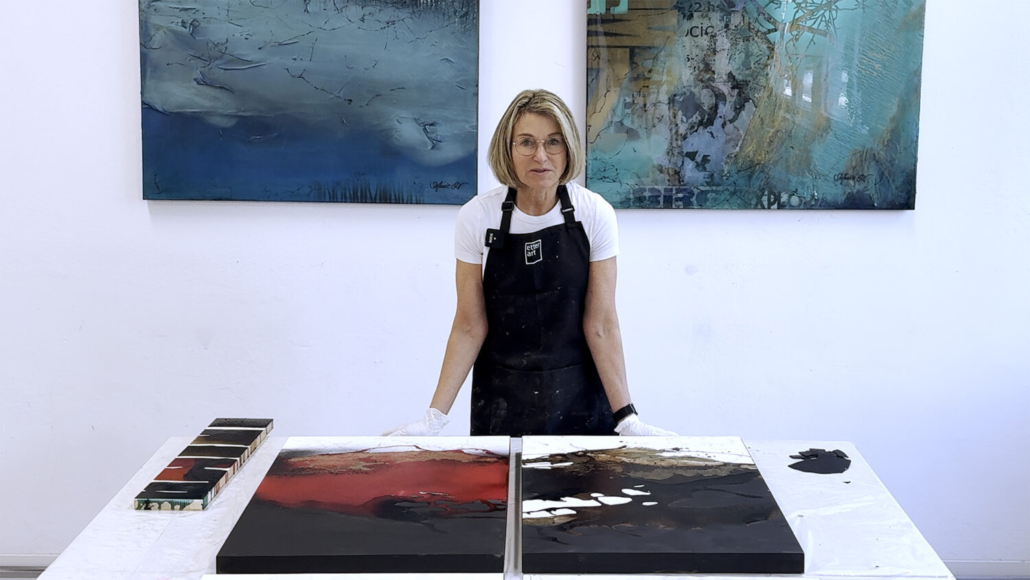
“How to Liquid Color Techniques”: your technique video course for art with paint pours
Three fantastic materials for paint pours:
Pigments – inks – casting compound.
You might be thinking:
yes – sure – what?
Stefanie Etter surprises you with something extraordinary in this course, too. Materials you already know are used differently for paint pours or even repurposed. This allows you to experience – and create – art in a completely new way.
Psst: This isn’t about excessive pouring like you see in Instagram videos. It’s about real pouring for real art. And for that, you don’t need a lot of space or a huge painting surface.
This art course is a technique course.
You’ll (re)discover different materials in the context of paint pours. You’ll learn how they behave on different surfaces. How you can use them in your art: as a base, background or compositional element. You’ll discover how movement, reactions and material properties affect the visual result. And you’ll experience Stefanie in her element.
Is this exactly what you’re looking for?
What you’ll get in the “How to Liquid Color Techniques” self-paced technique course
- 5 individual videos: Learn how to use pigments, ink and AQUA CAST casting compound for paint pours – to create backgrounds and design elements.
- 115 minutes in total: Different materials, different effects. The same applies to paint pours. Here, detailed material knowledge and techniques are the absolute focus. No complete artwork idea, but plenty of knowledge about paint pours from Stefanie Etter.
- 1 handout: with a materials list, mixing ratios, information, explanations and tips; for reference and your own notes.
What’s important when working artistically with paint pours – techniques in the video course
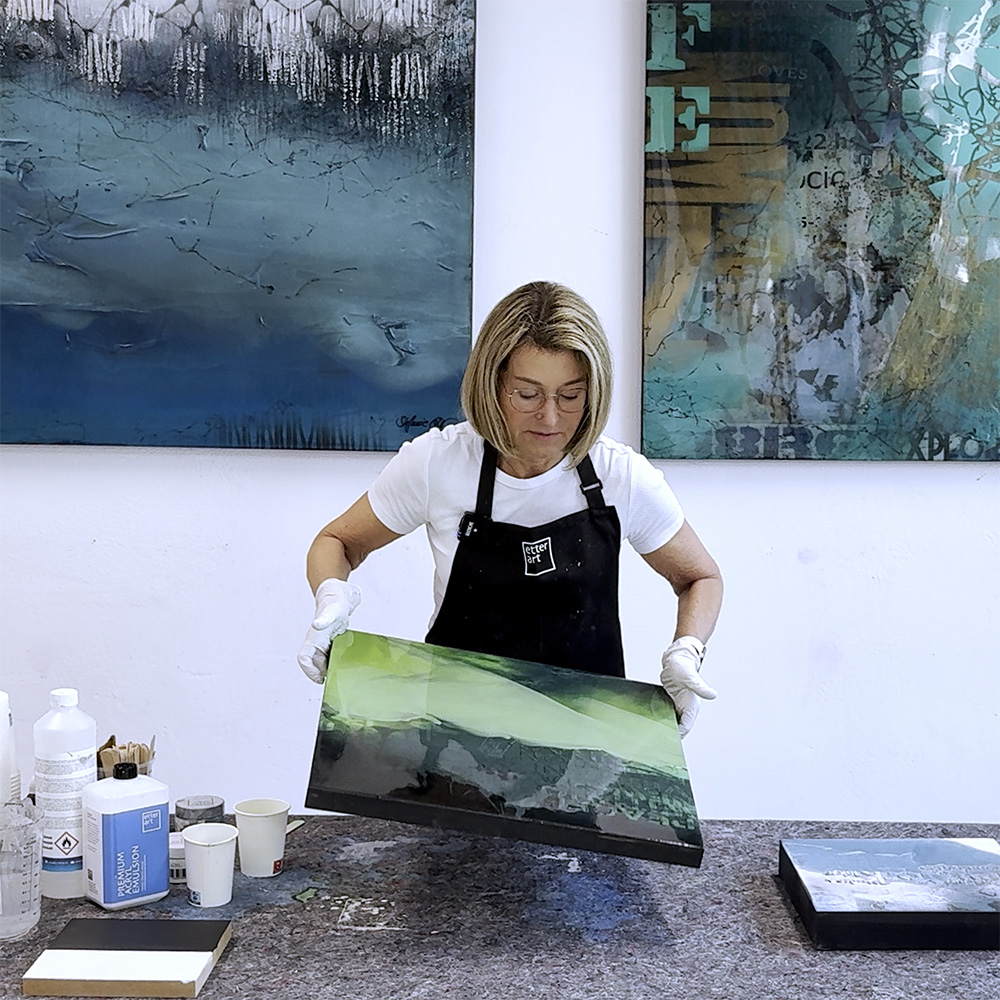
Paint pours sound exciting – and at first, they don’t exactly sound like something you can control, right? Stefanie shows you: paint pours are both. You can influence the process. The result is exciting.
Your influence extends to materials, binders and painting surfaces. To pouring, tilting, fixing and further working the paint. To the intensity of colours and the gloss of surfaces. To connections and repulsion. And to working in layers.
The exciting result comes from: everything you’ve just read. And additionally: from you and your ideas.
Ready for more?
What to expect in the “How to Liquid Color Techniques” self-paced video course – the practical part
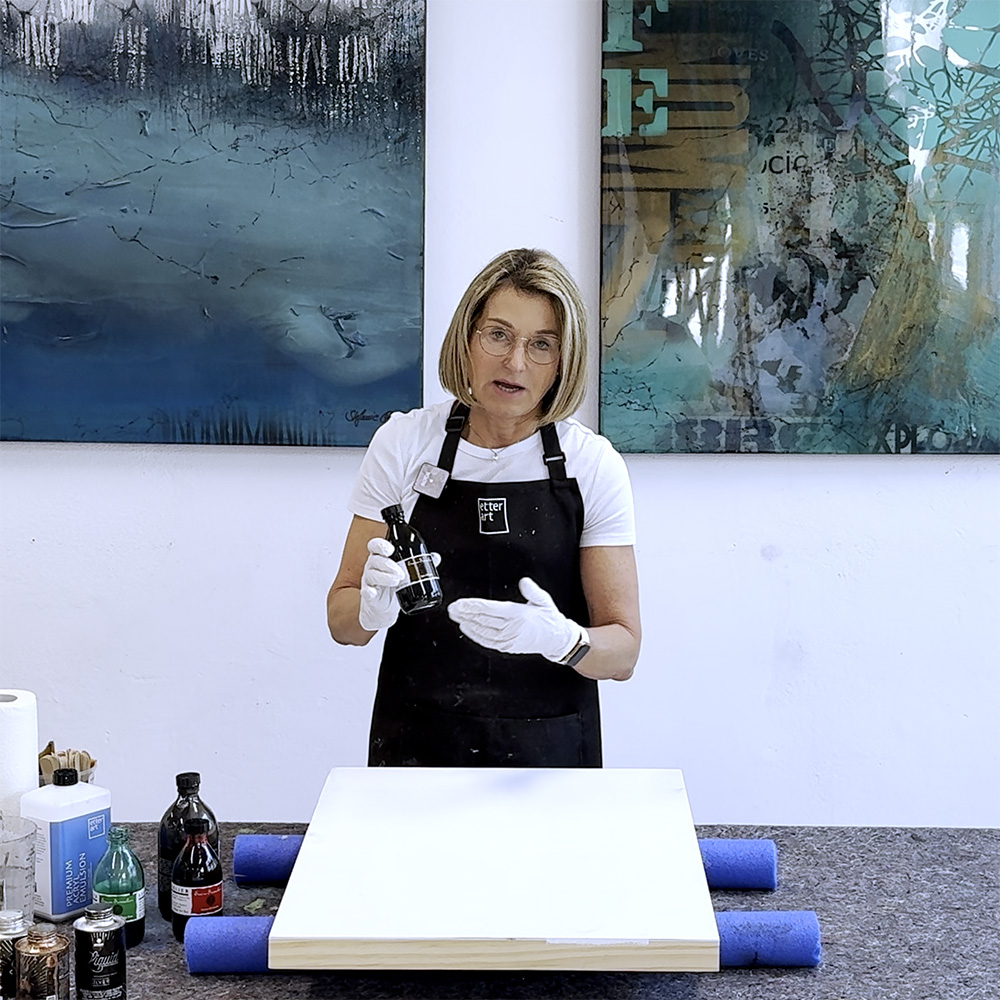
Video: Intro
- Overview of the video course content
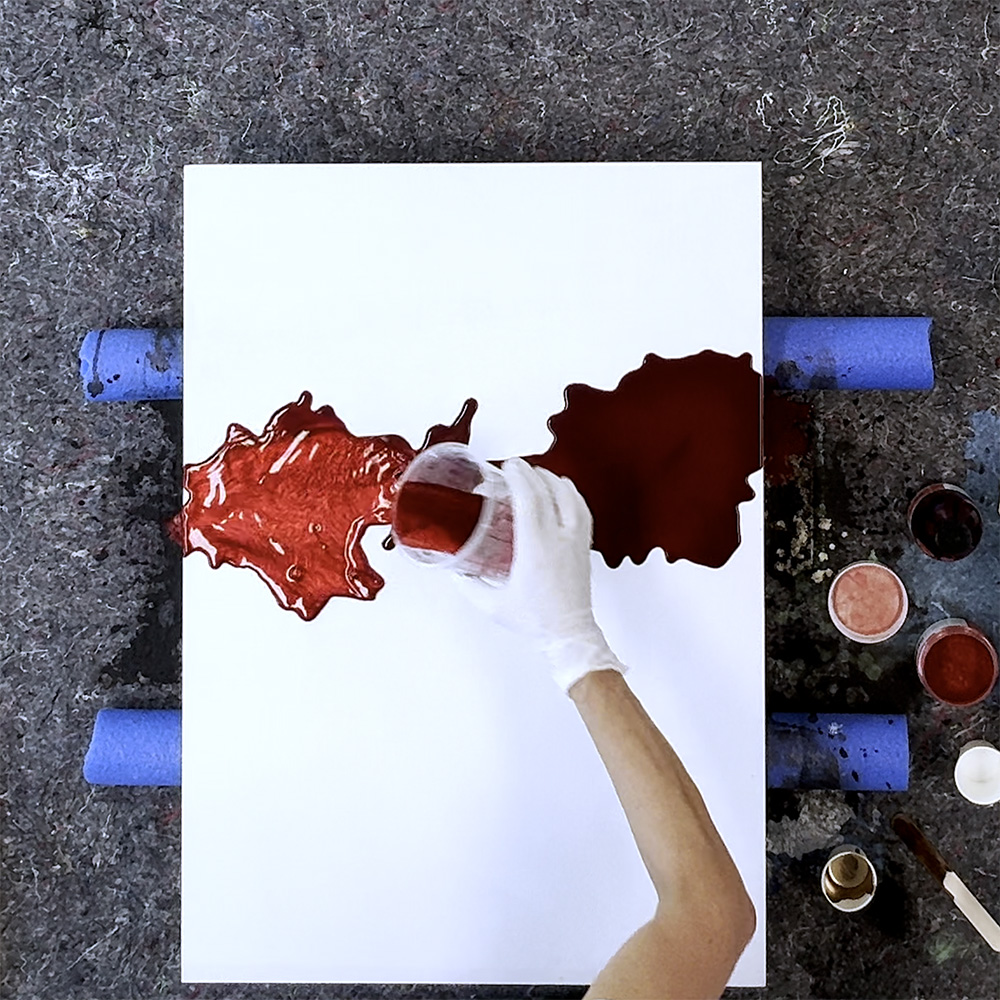
Video: Paint pours with pigments
- Mixing: Different binders have different effects – on the flow behaviour and how the paint moves when you tilt the painting surface. Possible: transparent to opaque pours.
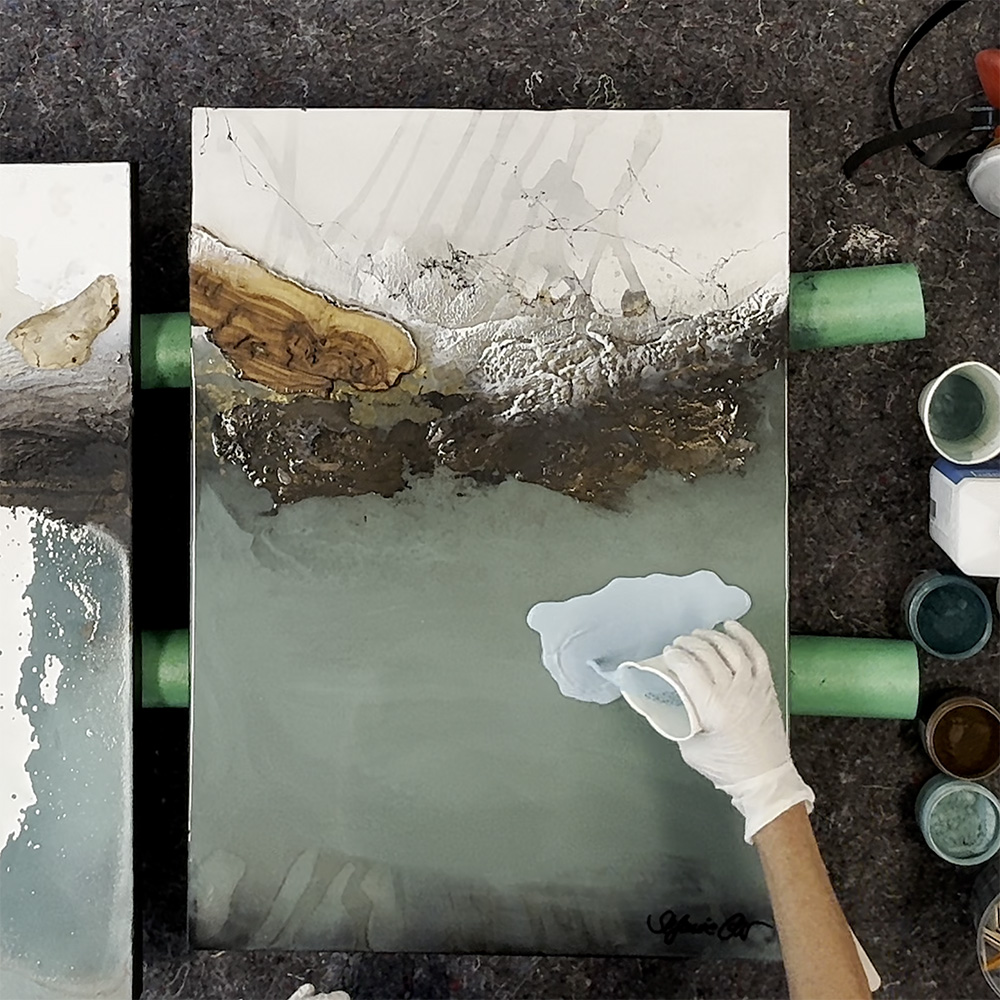
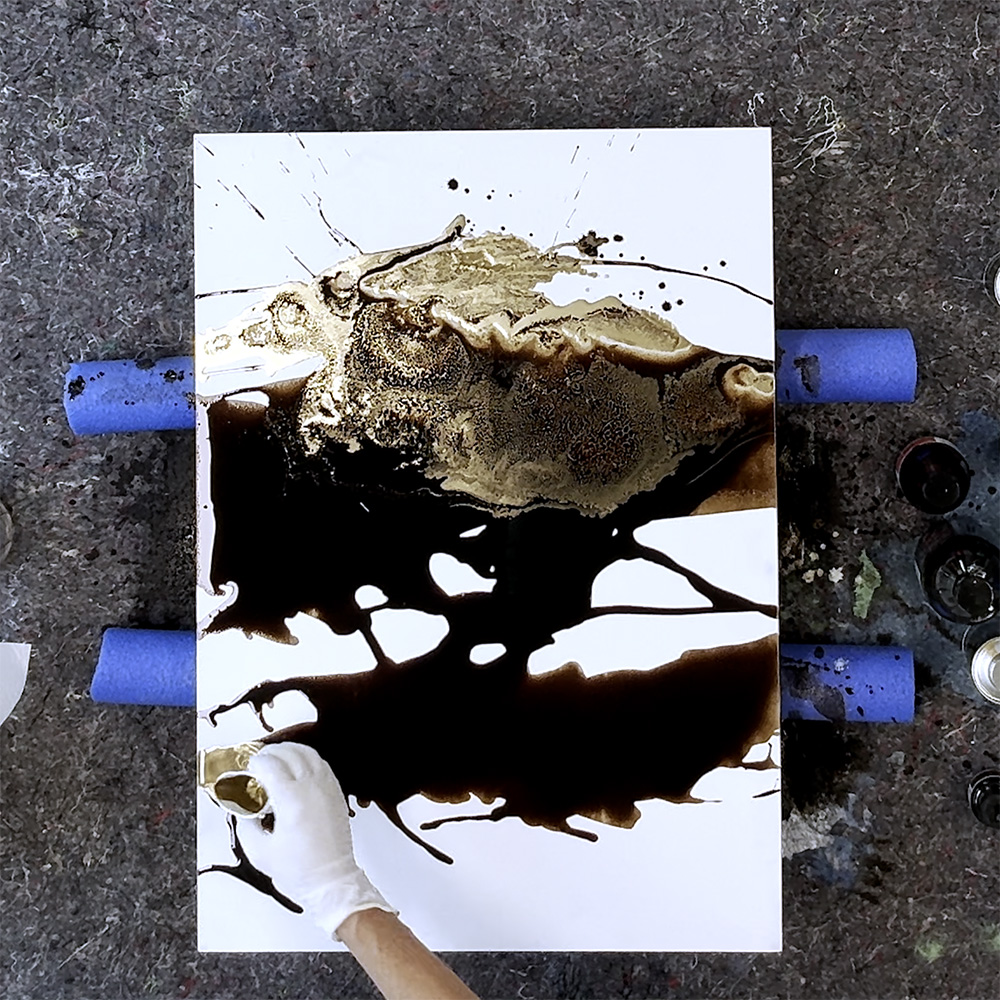
- Paint pours: They behave differently on canvas, wood, resin or mixed-media surfaces with, for example, wax. Plus: tilting the painting surface, because that’s part of working with paint pours.
- Fixing: Depending on the binder, the pour will adhere on its own. Everything else can simply be fixed – even with resin if you like. Prefer to remove it because you want a different result? In certain cases, that’s possible too!
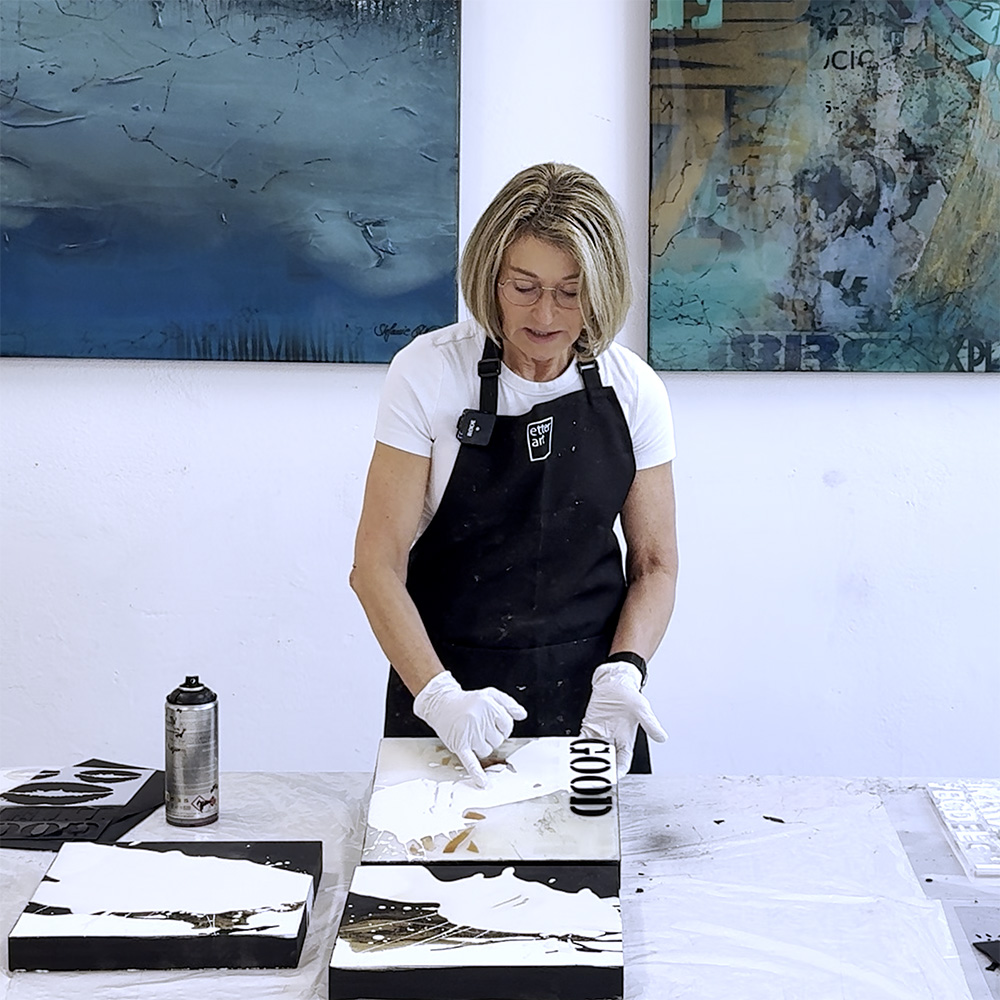
- Further work: Work on top of the pour. Create layered designs, for example with stencils and colour sprays.
You’ll learn: how to work with pearlescent and neon pigments on different surfaces. How to fix them with and without resin. How to check your mixed colours. How to store leftover colour mixtures. And as a Stefanie special: why pool noodles are a helpful tool for your creative work.
Video: Paint pours with shellac inks
- Painting surface: This is important when working with ink, regardless of the technique.
- Paint pour: Use it pure or diluted. Learn why tilting the painting surface after pouring is relevant and also plays a role in the composition. Dropping colour mixtures onto the surface can also be used as a creative element. Create exciting repulsion reactions by pouring varnish over the ink pour. Combine ink pours with colour sprays.
- Creating a sample board: How do Chinese ink and shellac ink differ? What happens when the pour is used pure or diluted? How do different shades work? And what works, why and in what way?
You’ll learn: technical details. Combining paint pours and colour sprays. Repulsion between metallic pigment and ink. How fascinatingly different levels of opacity in the ink pour can affect the result.
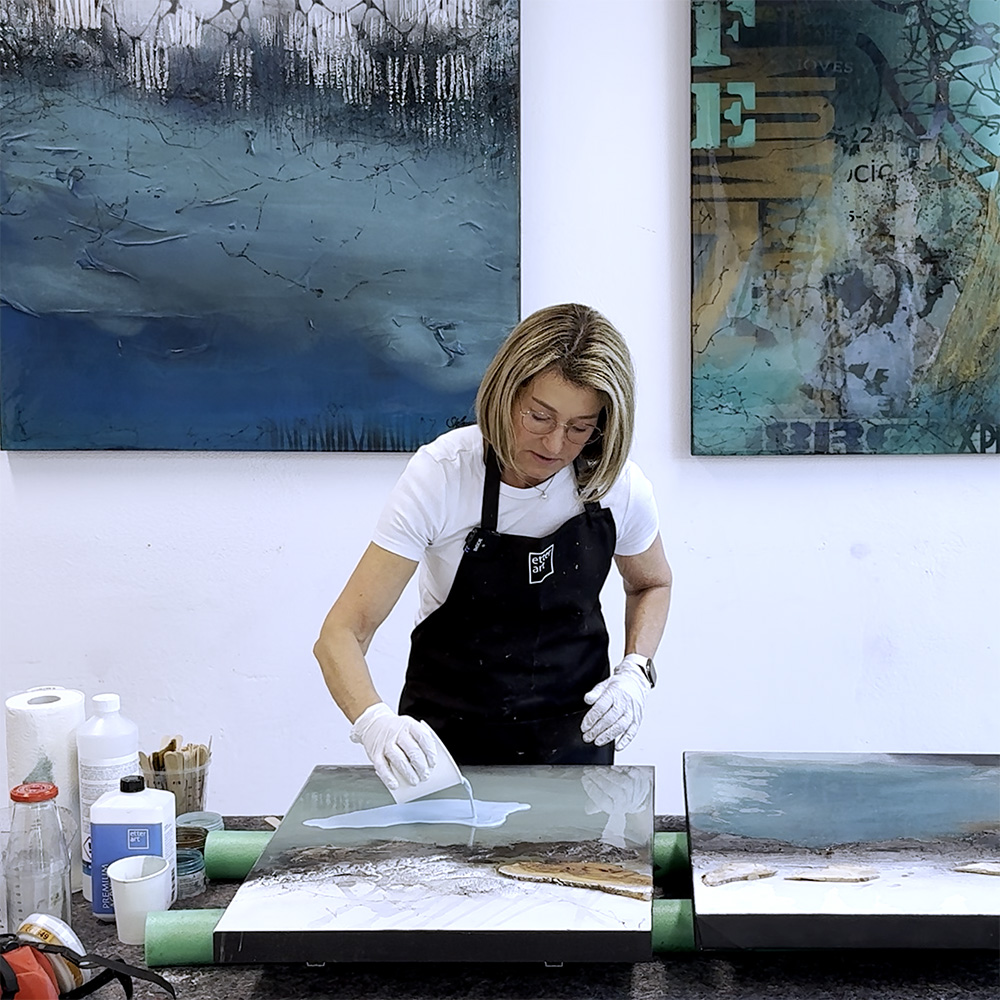
Video: Paint pours with AQUA CAST casting compound
- Using it in its original form: A quick material guide covering mixing, colouring and pouring. Plus a Stefanie special, where she shows you how to create something with AQUA CAST that you can later incorporate into the pour as a tactile element. Welcome to more mixed media!
- Using it as a paint pour: Mixing, consistency and drying – the facts, the theory and the practice. Whether to pre-treat the surface or not. And how to create AQUA CAST pours on a shellac ink pour or on resin.
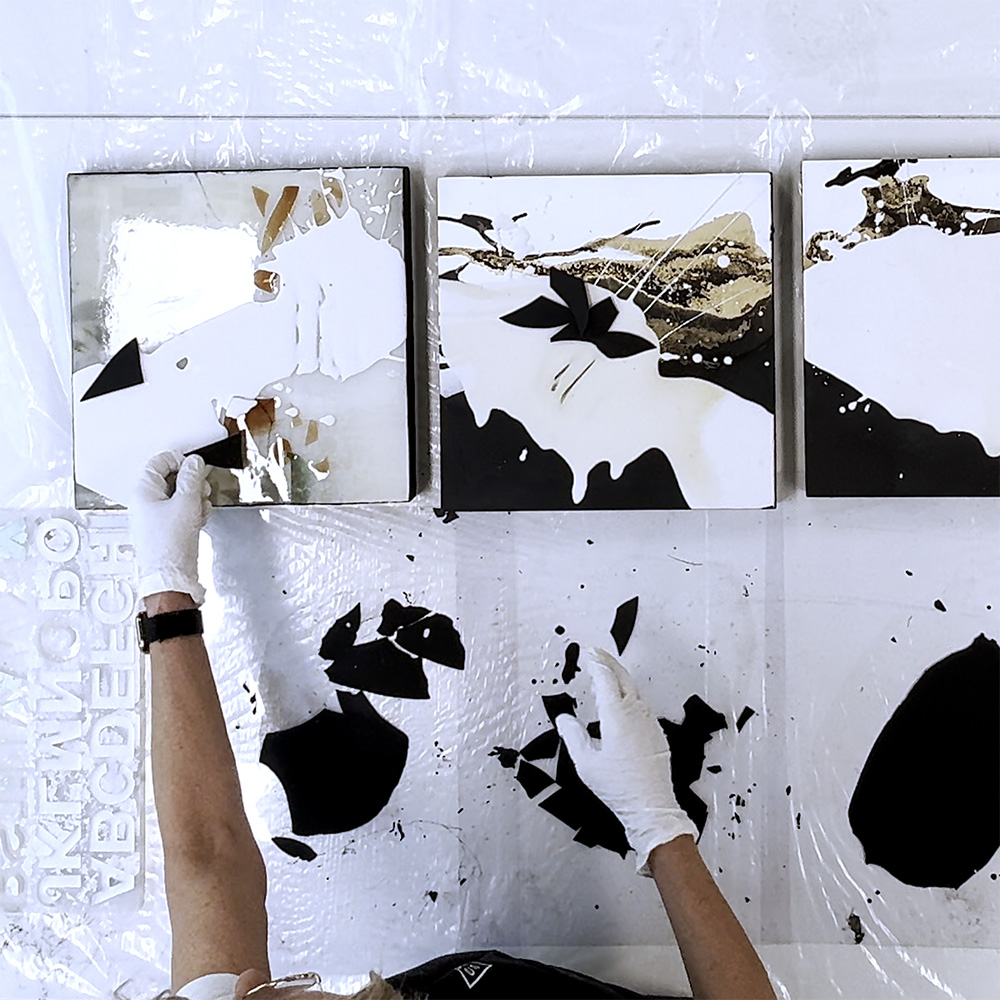
- Colour it or leave it as it is: Your art, your decision. Pour AQUA CAST in white or black. Or make it as colourful as you like. For pours with porcelain-like surfaces.
You’ll learn: how to use the casting compound in its original form and how to repurpose it – to expand your artistic possibilities. What you need to keep in mind for paint pours and what is possible with a material that was originally designed as a paste.
Video: Outro
- Recap
- Sample board check
Convinced by paint pours?
That doesn’t surprise us at all. Paint pours offer fantastic possibilities for fantastic art.
You’ll know exactly what you can do once you’ve watched the course. And you know what you need to do to watch the course.
Your “How to Liquid Color Techniques” self-paced online course costs €79.00.